Something Unusual Is Happening on the Sun — A Growing Coronal Hole Is Sending Solar Wind Toward Earth


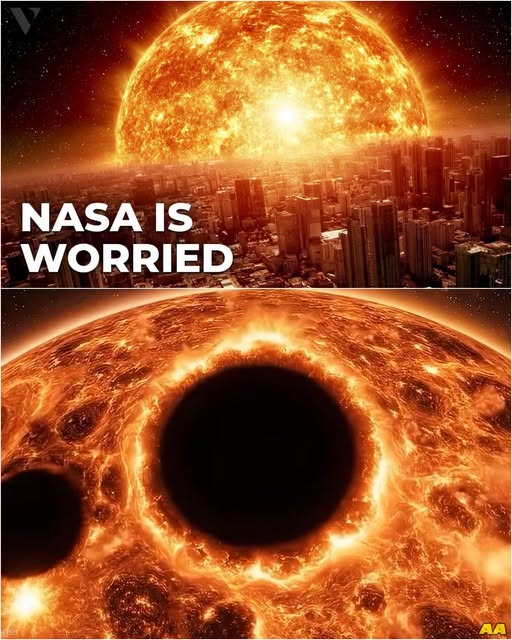
A large dark region has opened across the Sun’s surface. Scientists call it a coronal hole — an area where the Sun’s magnetic field lines open outward, allowing high-speed solar wind to stream into space more easily than usual. These features appear darker because they are cooler and less dense than the surrounding corona.
Coronal holes are a normal part of solar activity, but when a large one faces Earth it can drive multi-day streams of charged particles. Those streams sometimes trigger geomagnetic storms capable of affecting satellites, high-frequency radio, GPS accuracy, and, in stronger cases, power-grid operations. Aurora may also appear at lower latitudes than usual.
Right now forecasters are watching the size, position, and magnetic complexity of this particular hole, along with any associated solar wind data arriving at the L1 satellites. Most such events produce only mild to moderate effects. Extreme outcomes remain possible but uncommon.
Beyond the immediate space-weather picture, the script explores the Sun’s longer story: its gradual brightening, eventual red-giant phase billions of years from now, and the profound questions those changes raise about the future of life in the solar system.
A temporary dark patch on our star is reminding us how closely Earth’s technology — and ultimately its habitability — remain tied to the Sun’s restless magnetic behavior.
Is this just another routine coronal hole… or a sign the current solar cycle still has more in store? Share your thoughts below.