Solar Alert: A Large Coronal Hole Is Sending High-Speed Wind Toward Earth


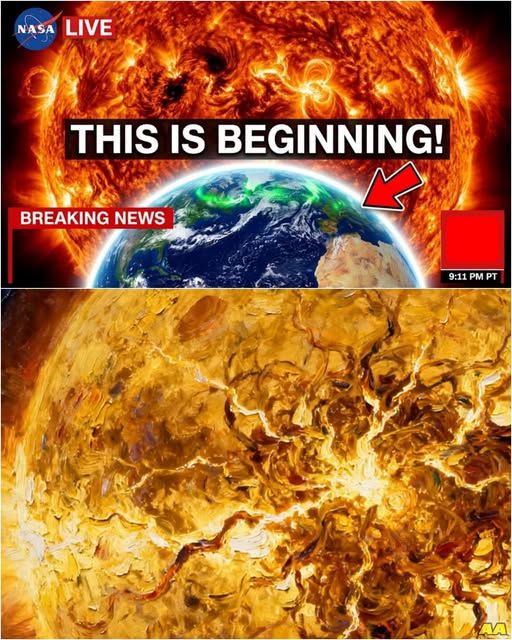
A sizable coronal hole is currently facing Earth, allowing solar wind to stream outward at elevated speeds — potentially reaching 600–700 km/s. Unlike a sudden flare or coronal mass ejection, this is a steadier high-speed stream that can drive multi-day geomagnetic activity.

Forecasters at NOAA and other agencies have issued watches for G1 (minor) geomagnetic storming, with a chance it could reach G2 levels. Even moderate storms can push the aurora farther south than usual, though short summer nights and moonlight will make viewing more difficult at mid-latitudes.
This event is unfolding during the active phase of Solar Cycle 25. Recent weeks have already produced strong flare sequences and unexpected storm intensity, reminding operators that conditions can change quickly. At the same time, sunspot regions continue to evolve: some earlier complex regions have simplified, while a newer, magnetically tangled region has rapidly become one of the most watched spots on the disc.
Coronal-hole streams are among the more predictable forms of space weather because the same features often return with the Sun’s roughly 27-day rotation. Still, the combination of elevated solar wind, residual activity from earlier eruptions, and ongoing sunspot development keeps this a period worth monitoring.
Is this week’s coronal hole just another routine stream… or part of a still-active solar maximum that has more surprises ahead? Share your thoughts below.